

News
1989 - THE WSOP TRIFECTA THAT DIDN'T HAPPEN
Jul 08 2014 03:49 PM EST
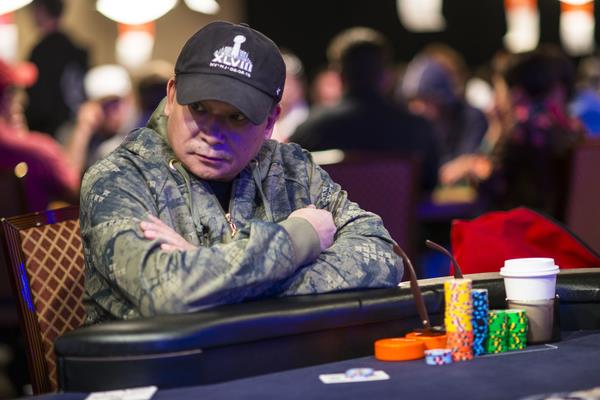
It’s hard to believe that a quarter century has now passed since the 1989 WSOP Main Event was held at Binion’s Horseshoe. While just about everything about the game has changed since then to the point of those bygone times seeming like nostalgia, some things in poker remain constant. Case in point -- Johnny Chan.
Now playing here at the 2014 series which is taking place at the Rio in Las Vegas, Chan looks the same now as he did back then. He still sports that iconic jet black crew cut. Like a predator stalking prey, his eyes remain fixated behind those menacing designer shades that cost what for many of us would be a month’s pay. If Chan’s presence was once intimidating all those years ago, the decades since have only added to an undeniable mystique.
In retrospect, Chan finishing second in the 1989 world championship doesn’t really matter, not when it comes to appraising what was accomplished. Sure, Chan would have much preferred to win back then and take residence upon the lofty eagle’s nest of three-time winners, an uber-elite fraternity of poker greats which includes only two names -- both long gone from the game – Johnny Moss and Stu Ungar. Yet, Chan’s runner-up finish in many ways remains just as impressive.
For one thing, let’s examine the size of the fields Chan overcame during his unequalled three-year run. First, he topped 152 players in 1987. The following year, he triumphed over a field of 167. Then, in 1989, he took second among 178 participants. Back then, championship fields were as tough any $10,000 buy-in level championship today. The tournament didn’t have what’s sometimes referred to as “dead money.” No one can imagine someone winning three $10,000 buy-in level events today, let alone during the late 1980’s.
Jack McClelland, who served as WSOP Tournament Director that year, witnessed everything. He recalled Chan having “a special aura” around him wherever he went around the Horseshoe.
“Johnny always has a certain presence about him, a special aura, you could always feel him when he was around, especially after he won the first time,” McClelland said. “By the time he came to play in the ’89 series, he was the man to beat. Everyone knew it. To win the WSOP, you had to beat Johnny Chan.”
That’s exactly how it all happened when Phil Hellmuth, then a 24-year-old virtual unknown upstart from Wisconsin, managed to derail Chan’s trifecta party.
“I remember Phil from the previous year because he was taller than everybody else, and we didn’t have many young people playing in the World Series,” McClelland recalled. “He’d cashed in the Main the year before and had some other cashes up to that point, so I wasn’t surprised to see him make a deep run in the [1989] series….beating Johnny heads-up solidified what we all came to find out later, that Phil is such a great player, maybe even the best.”
Chan has been interviewed numerous times about the year he came up just short. What’s most interesting is the fact he doesn’t blame fate or anyone else for the disappointing outcome. Instead, he takes full responsibility and even admitted he didn’t play his best.
At various times, Chan has said the way he played his final hand was a mistake. He also admitted to being fatigued on the fourth day, pressured not only be the demands of a long tournament, but media attention and a rigorous schedule that demanded that the final table start earlier than normal because those who were filming for television wanted the tournament over by nighttime. “I didn't get enough rest. I was burned out,” Chan once told Bluff Magazine.
In retrospect, Chan might be too tough on himself. He’s his own worst critic, as all the greatest players are. Yet, A-7 suited, the final hand he played in that tournament, is generally regarded as a strong hand, especially heads-up. Chan stood and watched helplessly as the final hand was dealt out, facing Hellmuth’s 9-9 in the ultimate showdown. The K-K-T flop didn’t necessarily help Chan, but a Q on the turn gave the defending champion some added outs. With the river still to be dealt and a World Championship hanging in the balance, any card higher than a ten would have given Chan a huge chip lead, and likely his third straight title. It didn’t happen. The river blanked with a 6, giving Hellmuth his first gold bracelet and Chan the runner-up spot.
Chan was asked again about his memories of the 1989 WSOP and how that still motivates him to compete at the highest level. During a break in this year’s action on Day 2A, he admitted he still thinks back on that memorable year and amazing hand.
“Those were the good old days. I don’t think we realized it back then who great they were,” Chan said. “Now, there are just so many players you have to get through to win it – what were there this year, like six-thousand players? (the actual number is 6,683). It’s not going to get any easier, I promise you.”
While anyone who followed the game knew the 1989 defeat wouldn’t slow down Chan, nor diminish his stature in the game, Hellmuth’s future and fate seemed far less certain. However, in the years since then, Hellmuth has managed to win 12 more gold bracelets for a career total of 13. Meanwhile, Chan continues to be stuck at ten, his last victory taking place in 2005, the first year the WSOP was played at the Rio.
Postscript: Chan extracted some measure of revenge in 2011, when he played against Hellmuth in what was called a “grudge match.” The heads-up faceoff was shown on ESPN. Chan won a match, which took more than two and a half hours to complete. He collected $25,000. However, Hellmuth still gets to keep the 1989 gold bracelet.
Now playing here at the 2014 series which is taking place at the Rio in Las Vegas, Chan looks the same now as he did back then. He still sports that iconic jet black crew cut. Like a predator stalking prey, his eyes remain fixated behind those menacing designer shades that cost what for many of us would be a month’s pay. If Chan’s presence was once intimidating all those years ago, the decades since have only added to an undeniable mystique.
In retrospect, Chan finishing second in the 1989 world championship doesn’t really matter, not when it comes to appraising what was accomplished. Sure, Chan would have much preferred to win back then and take residence upon the lofty eagle’s nest of three-time winners, an uber-elite fraternity of poker greats which includes only two names -- both long gone from the game – Johnny Moss and Stu Ungar. Yet, Chan’s runner-up finish in many ways remains just as impressive.
For one thing, let’s examine the size of the fields Chan overcame during his unequalled three-year run. First, he topped 152 players in 1987. The following year, he triumphed over a field of 167. Then, in 1989, he took second among 178 participants. Back then, championship fields were as tough any $10,000 buy-in level championship today. The tournament didn’t have what’s sometimes referred to as “dead money.” No one can imagine someone winning three $10,000 buy-in level events today, let alone during the late 1980’s.
Jack McClelland, who served as WSOP Tournament Director that year, witnessed everything. He recalled Chan having “a special aura” around him wherever he went around the Horseshoe.
“Johnny always has a certain presence about him, a special aura, you could always feel him when he was around, especially after he won the first time,” McClelland said. “By the time he came to play in the ’89 series, he was the man to beat. Everyone knew it. To win the WSOP, you had to beat Johnny Chan.”
That’s exactly how it all happened when Phil Hellmuth, then a 24-year-old virtual unknown upstart from Wisconsin, managed to derail Chan’s trifecta party.
“I remember Phil from the previous year because he was taller than everybody else, and we didn’t have many young people playing in the World Series,” McClelland recalled. “He’d cashed in the Main the year before and had some other cashes up to that point, so I wasn’t surprised to see him make a deep run in the [1989] series….beating Johnny heads-up solidified what we all came to find out later, that Phil is such a great player, maybe even the best.”
Chan has been interviewed numerous times about the year he came up just short. What’s most interesting is the fact he doesn’t blame fate or anyone else for the disappointing outcome. Instead, he takes full responsibility and even admitted he didn’t play his best.
At various times, Chan has said the way he played his final hand was a mistake. He also admitted to being fatigued on the fourth day, pressured not only be the demands of a long tournament, but media attention and a rigorous schedule that demanded that the final table start earlier than normal because those who were filming for television wanted the tournament over by nighttime. “I didn't get enough rest. I was burned out,” Chan once told Bluff Magazine.
In retrospect, Chan might be too tough on himself. He’s his own worst critic, as all the greatest players are. Yet, A-7 suited, the final hand he played in that tournament, is generally regarded as a strong hand, especially heads-up. Chan stood and watched helplessly as the final hand was dealt out, facing Hellmuth’s 9-9 in the ultimate showdown. The K-K-T flop didn’t necessarily help Chan, but a Q on the turn gave the defending champion some added outs. With the river still to be dealt and a World Championship hanging in the balance, any card higher than a ten would have given Chan a huge chip lead, and likely his third straight title. It didn’t happen. The river blanked with a 6, giving Hellmuth his first gold bracelet and Chan the runner-up spot.
Chan was asked again about his memories of the 1989 WSOP and how that still motivates him to compete at the highest level. During a break in this year’s action on Day 2A, he admitted he still thinks back on that memorable year and amazing hand.
“Those were the good old days. I don’t think we realized it back then who great they were,” Chan said. “Now, there are just so many players you have to get through to win it – what were there this year, like six-thousand players? (the actual number is 6,683). It’s not going to get any easier, I promise you.”
While anyone who followed the game knew the 1989 defeat wouldn’t slow down Chan, nor diminish his stature in the game, Hellmuth’s future and fate seemed far less certain. However, in the years since then, Hellmuth has managed to win 12 more gold bracelets for a career total of 13. Meanwhile, Chan continues to be stuck at ten, his last victory taking place in 2005, the first year the WSOP was played at the Rio.
“I had played with Hellmuth before then. I didn’t know much about him. To me, he was just a cocky little kid,” Chan recalled. “He had the determination to win….he seemed to do alright, too. Things turned out okay for him, as well.”